Speaking Strategies
Master all 8 speaking tasks with strategies for advice-giving, storytelling, scene description, persuasion, and opinion expression, scored on Content/Coherence, Vocabulary, Listenability, and Task Fulfillment.
Task 1: Giving Advice
Format
- 30 seconds to prepare, 90 seconds to speak.
- A prompt describes a situation where a friend or colleague needs advice.
- Give organized, practical advice with clear reasoning.
Strategies
Example
Your coworker is looking for a good restaurant for a birthday dinner. Give your coworker advice about suitable restaurants and explain what makes them good choices for a special occasion.
I completely understand how important it is to find the perfect restaurant for a birthday celebration, so let me share a few suggestions with you.
First of all, I would highly recommend looking into an upscale Italian restaurant. Italian cuisine tends to have something for everyone, from pasta dishes to seafood, so no one in your group will feel left out. What makes these restaurants particularly suitable for birthdays is that they typically offer a warm, intimate atmosphere with dim lighting and elegant table settings, which naturally creates a celebratory mood.
Another excellent option would be a Japanese restaurant that offers a teppanyaki experience. The chef cooks right at your table, which turns the dinner into interactive entertainment. This is especially wonderful for birthdays because it gives everyone a shared experience to enjoy together, rather than just a regular meal.
Finally, I'd suggest considering a restaurant with a rooftop patio or a scenic view. The ambiance of dining with a beautiful backdrop elevates the entire experience and makes it feel truly special. Many of these places also offer dessert options that can be customized for birthday celebrations.
Whichever option you choose, I'd strongly recommend making a reservation well in advance and mentioning that it's a birthday dinner. Most restaurants are happy to add small touches like a complimentary dessert or a decorated table to make the celebration even more memorable.
- Strategy #1 (Structure): Opens by acknowledging the coworker's situation before diving into advice, and ends with closing encouragement.
- Strategy #2 (Advisory language): Uses phrases like "I would highly recommend" and "I'd suggest considering" throughout.
- Strategy #3 (Specific and actionable): Three specific restaurant types are suggested with actionable details about why each works for birthdays.
- Strategy #4 (Give reasons): Each recommendation includes reasoning: Italian works "because it has something for everyone," teppanyaki works "because it turns dinner into entertainment."
Task 2: Talking about Personal Experience
Format
- 30 seconds to prepare, 60 seconds to speak.
- A prompt asks you to describe a personal experience related to a specific topic.
- Tell a specific story using varied past tenses.
Strategies
Example
Talk about a memorable trip you once took. Where did you go, what did you do there, and what made that trip particularly special or memorable for you?
One of the most memorable trips I have ever taken was a week-long visit to Banff National Park in Alberta three years ago. I had always dreamed of seeing the Canadian Rockies, and the reality far exceeded my expectations.
During the trip, my family and I hiked several scenic trails, including the stunning Lake Louise shoreline walk, where the turquoise water against the snow-capped mountains took my breath away. We also went canoeing on Moraine Lake, which was incredibly peaceful.
What made this trip particularly special was an unexpected encounter with a family of elk grazing right beside our hiking trail. We stood there quietly for about ten minutes, just watching them in their natural habitat. It was a humbling reminder of how magnificent nature can be.
This experience taught me the importance of stepping away from daily routines and immersing yourself in nature. Since then, I have made it a priority to plan at least one outdoor adventure every year.
- Strategy #1 (Pick a specific experience): Chooses one concrete trip to Banff rather than generalizing.
- Strategy #2 (STAR structure): Situation is a trip to Banff, Task was experiencing the Rockies, Action includes hiking and canoeing, Result was the elk encounter and its lasting impact.
- Strategy #3 (Varied past tenses): Uses "had always dreamed" (past perfect), "were grazing" (past continuous), and "stood" (simple past).
- Strategy #4 (Connect to broader topic): The closing reflection connects the experience back to a broader life lesson.
Task 3: Describing a Scene
Format
- 30 seconds to prepare, 60 seconds to speak.
- An image is displayed on screen for you to describe.
- Describe people, actions, settings, and atmosphere in detail.
Strategies
Example
Describe some things that are happening in the picture below as well as you can. The person with whom you are speaking cannot see the picture.
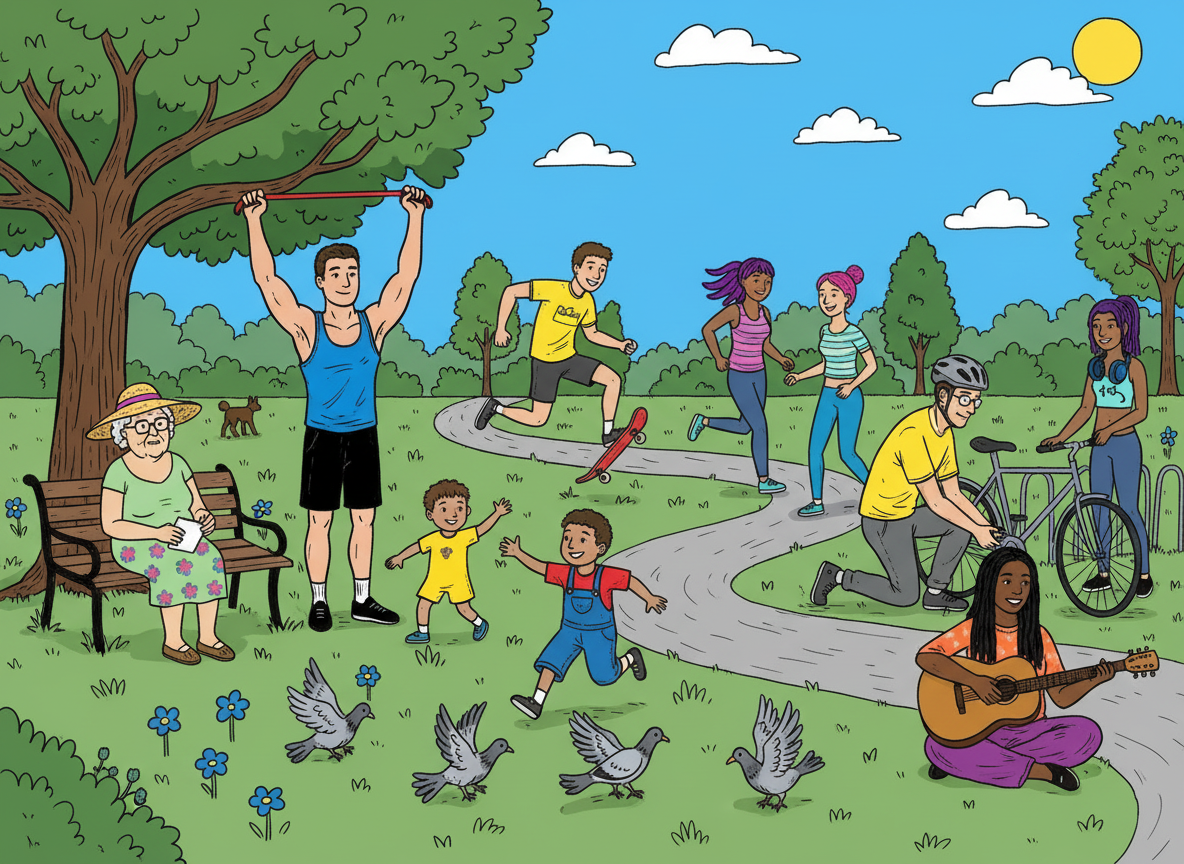
This image depicts a bustling city park on what appears to be a beautiful sunny afternoon, with numerous people engaging in various activities.
On the left side, a young man in athletic clothing is stretching near a large tree, presumably warming up for a jog. Just below him, a small dog is standing on the grass, and nearby, an elderly woman is comfortably seated on a wooden park bench, deeply absorbed in reading a book.
In the center of the image, two young boys are excitedly chasing a group of pigeons across the grassy area, while another boy is skateboarding just behind them. A girl with pink hair appears to be jogging past, looking quite energetic.
Moving to the right side, a young boy wearing a helmet is riding a bicycle along the path. Further back, a woman is sitting on the grass and playing a guitar, which suggests she is enjoying some music in the open air.
The overall atmosphere is lively yet relaxed, with people of all ages enjoying the sunny weather in their own ways.
- Strategy #1 (Big picture, then zoom in): Opens with the overall scene before zooming into specific individuals and activities across the image.
- Strategy #2 (People, actions, setting): Covers a wide range of people and activities: stretching, reading, chasing pigeons, skateboarding, jogging, cycling, and playing guitar, all within the park setting.
- Strategy #3 (Spatial language): Uses "on the left side," "in the center of the image," "just behind them," "moving to the right side," and "further back" to orient the listener.
- Strategy #4 (Speculate): Uses speculative language like "presumably warming up for a jog" and "which suggests she is enjoying some music" to add depth.
Task 4: Making Predictions
Format
- 30 seconds to prepare, 60 seconds to speak.
- The same image from Task 3 remains on screen.
- Predict what will happen next based on visual evidence.
Strategies
Example
In this picture, what do you think will most probably happen next?
Based on what I observe in this image, I believe several things are likely to happen next.
First, the young man who is currently stretching will most likely begin jogging along the park path once he finishes his warm-up. He might even run past the woman playing guitar on the right side of the image.
The two boys chasing the pigeons will almost certainly scare the birds away completely, and they might then turn their attention to the boy on the skateboard and want to join him. Meanwhile, the boy on the bicycle could ride further down the path and loop around the park.
As for the woman playing guitar, I think she will probably continue playing and might even attract a small audience of passersby who stop to listen. The small dog on the left side might also wander over toward the children, curious about all the commotion.
Overall, the park is going to become even more vibrant and lively as the afternoon progresses.
- Strategy #1 (Make 3-4 predictions): Four distinct predictions about different subjects in the scene: the man stretching, the boys and skateboarder, the cyclist, and the guitar player.
- Strategy #2 (Base on visual evidence): Each prediction is grounded in what's visible: "the young man who is currently stretching," "the boy on the skateboard," "the woman playing guitar."
- Strategy #3 (Varied future structures): Uses "will most likely," "might even," "will almost certainly," "could ride," and "is going to become."
- Strategy #4 (Immediate and longer-term): Immediate predictions about the current people, plus broader predictions about the overall park atmosphere.
Task 5: Comparing and Persuading
Format
- 60 seconds to select your option, 60 seconds prep, 60 seconds to speak.
- Two options are presented with images and feature lists.
- A third option is then introduced as someone else's suggestion.
- Persuade that your choice is better than the suggested option.
Strategies
Example
Your family is planning a week-long vacation for the upcoming summer, and you and your spouse have narrowed it down to two exciting options. Look at these two options, choose the one you prefer, and explain why.
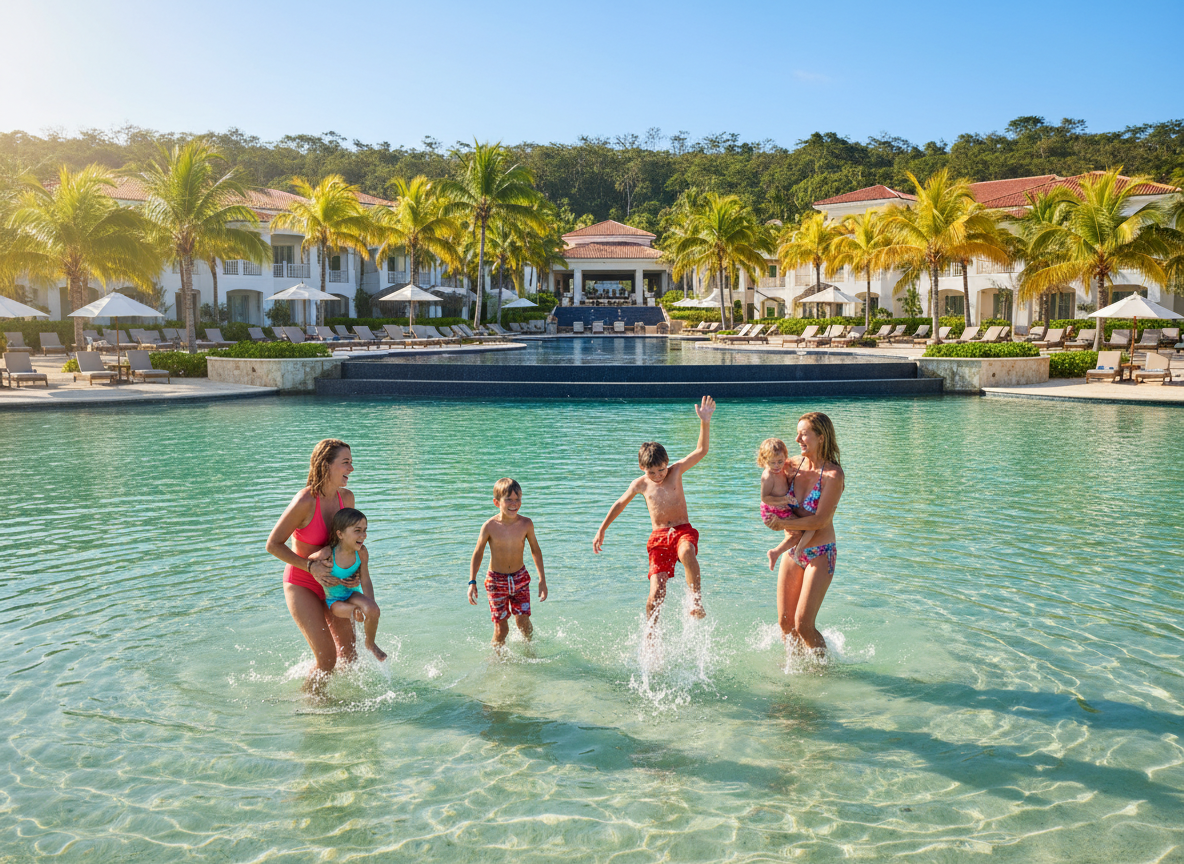
Tropical All-Inclusive Beach Resort
- 7 days/6 nights at a 4-star beachfront resort
- All meals and drinks included
- Kids' club and water sports activities
- $3,500 for a family of four
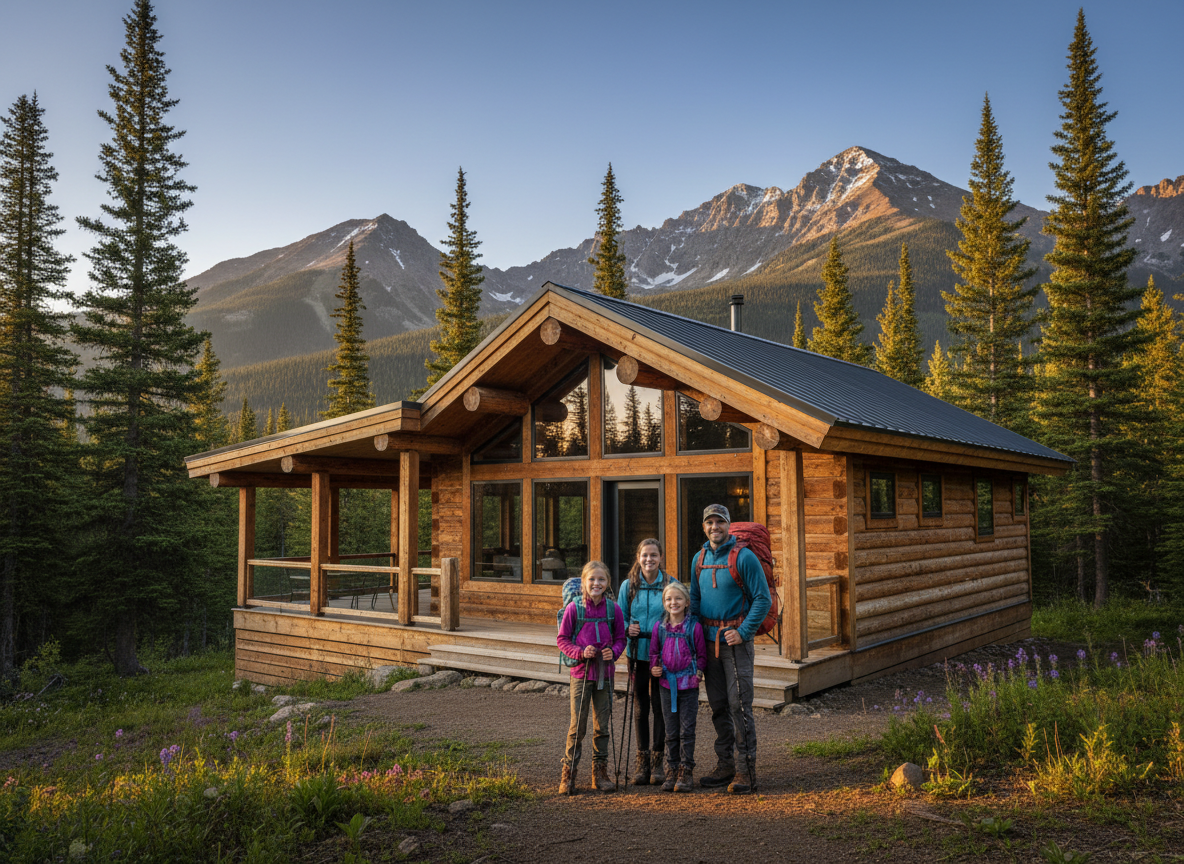
Rocky Mountain National Park Camping Adventure
- 7 days/6 nights in a mountain cabin
- Guided hikes and wildlife viewing
- Self-catering with nearby markets
- $2,200 for a family of four
Your spouse has now suggested a different vacation option. Persuade your spouse that the vacation you chose in Part 1 is more suitable for your family than the one your spouse is suggesting.
Other's Suggestion
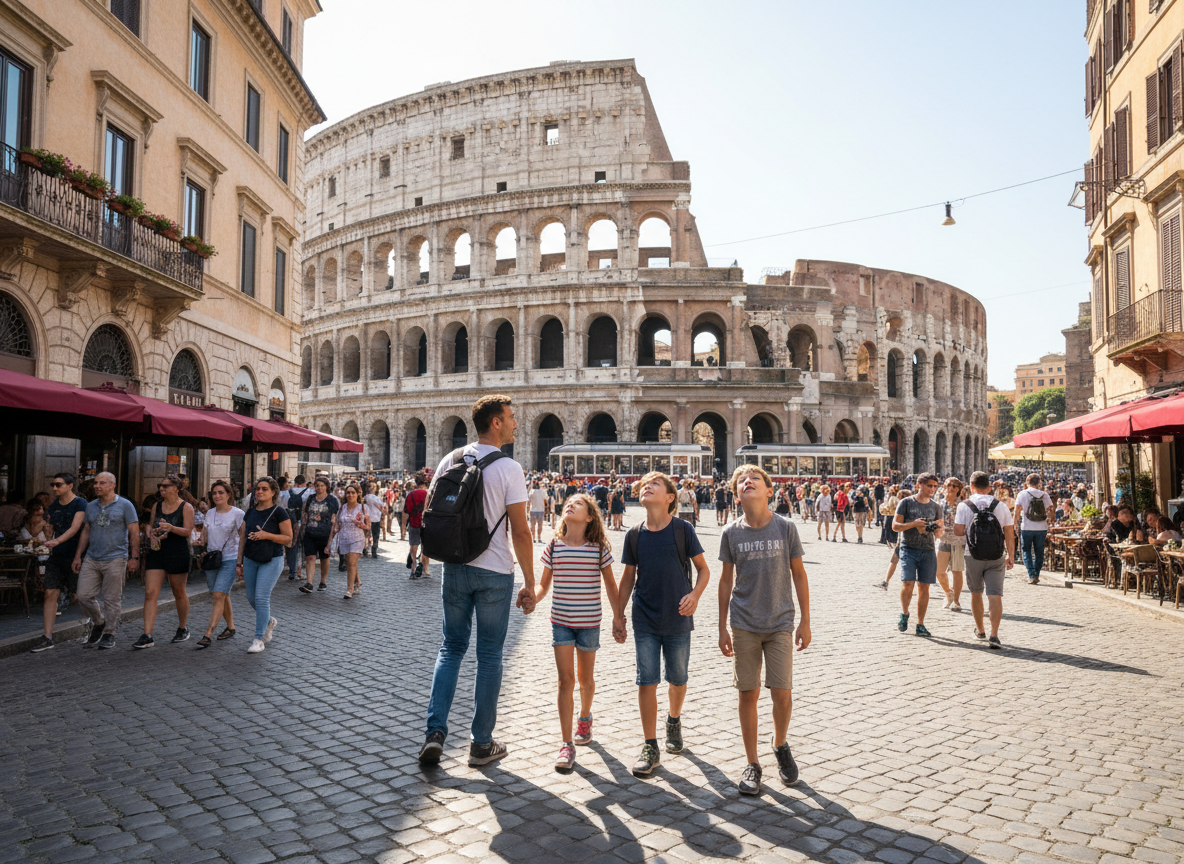
Historic European City Cultural Tour
- 7 days in Rome and Paris
- 3-star hotel accommodations
- Guided walking tours and museums
- $4,800 for a family of four
Your Choice
Tropical All-Inclusive Beach Resort
- 7 days/6 nights at a 4-star beachfront resort
- All meals and drinks included
- Kids' club and water sports activities
- $3,500 for a family of four
I understand that a European cultural tour sounds exciting, but I truly believe the beach resort is the far superior choice for our family vacation this summer.
First and foremost, consider the children. At a beachfront resort with a dedicated kids' club and water sports, they will be actively engaged and having the time of their lives. In contrast, walking through European museums and historic sites for seven straight days would likely exhaust and bore them.
Secondly, the all-inclusive package at thirty-five hundred dollars covers every meal, every activity, and every amenity. The European tour at forty-eight hundred dollars does not even include meals, so the real cost could easily exceed six thousand dollars once you factor in dining out in Rome and Paris.
Most importantly, we both deserve genuine relaxation. The beach resort allows us to truly unwind, whereas navigating foreign cities with two young children would be more stressful than our regular work week.
For all these reasons, I strongly encourage us to choose the beach resort.
- Strategy #1 (Prep wisely): Specific facts like the price comparison ($3,500 vs $4,800+) strengthen the argument.
- Strategy #2 (State recommendation immediately): The opening sentence declares the beach resort as "the far superior choice."
- Strategy #3 (Comparative structures): Uses "in contrast," "unlike the European tour," and direct cost comparisons throughout.
- Strategy #4 (Acknowledge and counter): The other option is acknowledged briefly ("a European cultural tour sounds exciting, but...") before being countered.
- Strategy #5 (Clear recommendation): The closing line delivers a firm, persuasive recommendation.
Task 6: Dealing with a Difficult Situation
Format
- 60 seconds to prepare, 60 seconds to speak.
- A scenario describes a challenging interpersonal or professional situation.
- Two approaches are presented: EITHER one action OR another.
- Choose one approach and explain how you would handle it.
Strategies
Example
You have been working on a new marketing strategy for your team. Last week, you informally shared some of your best ideas with your colleague, Sarah, during a coffee break. Today, in a team meeting with your manager David, Sarah presented your core marketing strategy as her own work and received significant praise from David.
Choose ONE of the following options. EITHER Talk to Sarah. Explain that she needs to clarify with David that the idea was originally yours. OR Talk to David. Explain that while you appreciate Sarah's presentation, the original concept was developed by you.
Sarah, I appreciate you having a moment to talk. I want to discuss something that happened in today's team meeting, and I hope we can resolve it constructively.
I noticed that the marketing strategy you presented to David was actually very similar to the concept I had shared with you last week during our coffee break. I understand it may not have been intentional, but I felt uncomfortable when the idea was presented without any acknowledgment of our conversation.
What I would really appreciate is if you could speak with David and clarify that we collaborated on this concept, or at least that the original idea came from our discussion. I think this is important not only for fairness but also for maintaining the trust in our working relationship.
Going forward, I would love for us to continue sharing ideas, perhaps even presenting them together as a joint effort. That way, we both receive proper credit and strengthen our professional partnership.
- Strategy #1 (Plan your reasoning): The collaborative tone throughout shows the speaker chose reasoning and relationship-building over confrontation.
- Strategy #2 (Empathy and diplomacy): Opens with "I appreciate you having a moment" and "I hope we can resolve it constructively."
- Strategy #3 (Step by step): Acknowledges the issue, explains the impact, makes a specific request, then proposes a future solution.
- Strategy #4 (Why your approach is better): Emphasizes trust and professionalism rather than blame.
Task 7: Expressing Opinions
Format
- 30 seconds to prepare, 90 seconds to speak.
- A question asks for your opinion on a topic.
- Express a clear position and support it with reasons and examples.
Strategies
Example
Answer the following question.
Do you think schools should adopt a year-round schedule with shorter breaks, or should they maintain the traditional schedule with a long summer break? Explain your reasons.
I firmly believe that schools should adopt a year-round schedule with shorter, more frequent breaks, and I have several compelling reasons for this position.
My primary argument is that the traditional long summer break leads to significant learning loss. Research consistently shows that students forget a substantial portion of what they learned during a two-month absence from school. Teachers then spend the first several weeks of each fall semester reviewing material from the previous year, which is an inefficient use of valuable instructional time. With shorter breaks distributed throughout the year, this problem would be dramatically reduced.
Additionally, a year-round schedule provides more consistent support for working families. Many parents struggle to arrange affordable childcare during the lengthy summer vacation, which creates both financial stress and inequality. Families with fewer resources are disproportionately affected by this challenge.
While some might argue that children need the long summer break for rest and recreation, I would counter that shorter, more regular breaks actually provide better opportunities for meaningful rest. Students can recharge every few months without the boredom and loss of routine that often accompanies an extended summer vacation.
In conclusion, adopting a year-round schedule would improve academic outcomes, support families more effectively, and still provide students with adequate time for rest and recreation. It is, in my view, the clear choice for modern education.
- Strategy #1 (Clear position): Takes an unambiguous stance from the outset with "I firmly believe."
- Strategy #2 (2-3 distinct reasons): Two well-developed reasons are provided: reduced learning loss and better support for working families, each with specific evidence.
- Strategy #3 (Use extra time wisely): The third paragraph addresses and counters the opposing viewpoint: "While some might argue...I would counter that..."
- Strategy #4 (Opinion language): Uses "in my view," "I firmly believe," and "I would counter" consistently throughout.
Task 8: Describing an Unusual Situation
Format
- 30 seconds to prepare, 60 seconds to speak.
- An image shows an unusual or surprising scene.
- Describe what you see and speculate about why it is happening.
Strategies
Example
You are stuck in a slow-moving city traffic jam, feeling a bit bored, when you spot an incredibly unusual car next to you. Your friend Chris loves unique designs and eco-friendly ideas. Call Chris, describe this astonishing vehicle, and tell him why it's so surprising.
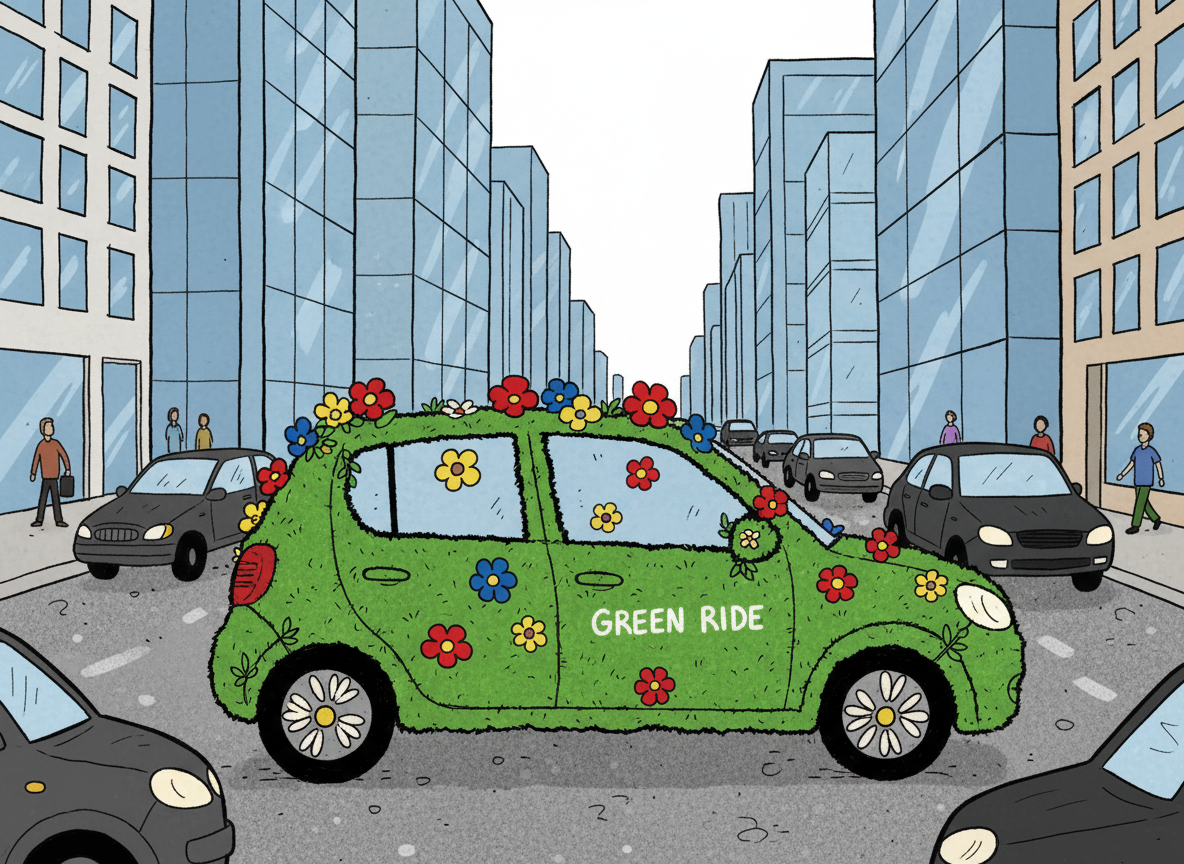
Hey Chris, you are not going to believe what I am looking at right now! I am sitting in traffic downtown, and there is the most extraordinary vehicle right next to me.
It is a car that is completely covered in living plants and flowers. The entire body appears to be coated in real grass, like an actual lawn, and there are vibrant flowers of every color blooming all over it: red roses along the hood, bright yellow sunflowers near the roof, and purple lavender along the sides. It looks like someone drove a garden right onto the road.
What makes this particularly surprising is that the plants appear to be genuinely alive and thriving. I can only imagine the amount of maintenance this must require, from daily watering to ensuring the soil stays in place while driving.
I immediately thought of you because this is exactly the kind of innovative, eco-friendly design you are passionate about. It is a truly remarkable fusion of nature and urban transportation.
- Strategy #1 (Start with what's unusual): Immediately identifies the unusual element: "the most extraordinary vehicle" covered in living plants.
- Strategy #2 (Describe, then speculate): Thoroughly describes the scene first (grass coating, specific flowers and colors) before moving into speculation.
- Strategy #3 (Offer possible explanations): Questions about maintenance and how the plants stay alive show creative thinking.
- Strategy #4 (Speculative language): Uses "appears to be," "I can only imagine," and "it looks like" throughout.
Practice Speaking Now
Apply these strategies with real CELPIP-style speaking prompts and get scored.
Start Practicing